Ways To Remember
Meaningful Ways to Honour a Loved One on Special Days
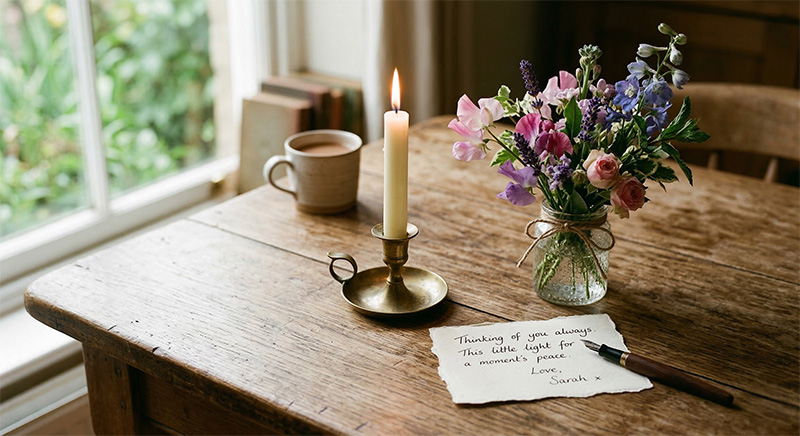
Special days after a loss do not have to be only about absence. They can also be about presence, about finding small, deliberate ways to keep someone woven into occasions that still belong to them.
Honouring someone who has died does not require grand gestures or elaborate rituals. It can be as quiet as lighting a candle, as simple as cooking a meal they loved, as private as writing a few words that nobody else will ever read. What matters is the intention behind it: the decision to mark the day in a way that includes them rather than simply endures their absence.
This guide gathers some of the most meaningful ways people choose to honour a loved one on significant days. Not all of them will feel right for every person or every occasion. Take what resonates and leave what does not. The only measure of whether something is worth doing is whether it feels true to the person you are remembering and to the relationship you had with them.
Why Honouring Matters
There is a difference between getting through a difficult day and actively marking it. Both are valid. Sometimes getting through is genuinely all you have, and that is enough. But for many people, having something intentional to do on a day that carries grief, something that acknowledges the person rather than simply enduring their absence, makes the day feel more bearable rather than less.
Part of this is about agency. Grief can feel like something that happens to you, something you have very little control over. Choosing to do something in honour of the person, however small, gives you back a degree of agency. You are not just waiting for the day to pass. You are actively including them in it.
Part of it is also about the relationship continuing. The bond with someone who has died does not end when they die. It changes form, but it persists. Finding ways to honour them on significant days is one of the ways that bond is maintained and expressed, in the absence of the ordinary contact that used to do that work.
Simple Acts of Remembrance
Light a candle
Few acts of remembrance are as universally meaningful as lighting a candle. There is something about a flame, its warmth, its light, its quiet presence, that feels connected to the act of remembering in a way that is hard to explain but easy to feel. You might light one first thing in the morning, or at a time of day that had significance to the person, or at dinner, or simply when you feel the need of it. Some people let it burn for the duration of a special day. Some light one every year on the same date. The ritual can be as simple or as consistent as you want it to be.
Visit somewhere they loved
A place carries memory in a way that photographs and objects sometimes cannot match. Being somewhere the person loved, a walk they always took, a bench they returned to, a view they talked about, can create a feeling of closeness that is hard to find elsewhere. Going on a significant day, their birthday, an anniversary, a day that was important to them, gives the visit a shape that makes it feel like more than just a walk.
Cook or eat something of theirs
Food connects people across time in a way that few other things do. A recipe they always made, a meal they cooked every Sunday, a biscuit they were particular about, a dish that existed only in their kitchen in quite the way they made it. Cooking it, or eating it, or attempting to recreate it from memory, can be one of the most tender acts of remembrance available. Some people make this a deliberate annual ritual on a significant day. Others do it whenever they need to feel close to the person.
Look through photographs
On ordinary days, photographs can be too much. The sight of them can surface grief before you are ready for it. On a day when you have already decided to remember, sitting with photographs can feel different. Slower, more intentional. An opportunity to look properly at the details of a face, a smile, a setting, in a way that ordinary life does not leave room for. Some people find this easier with someone else who loved the person. Others prefer to do it alone.
Write to them
Writing a letter, or a few lines in a journal, to the person who has died is something many people find deeply helpful on significant days. You might tell them what has happened since you last wrote. What you are thinking about them. What you wish you could say. What you want them to know about the life you are still living. These letters have no destination, but they have a great deal of purpose. Over time, if you write one each year on a significant day, they become a record of both the grief and the life continuing alongside it.
Involving Other People
Gather and share stories
One of the most meaningful things you can do on a day that belongs to someone who has died is to bring together the people who knew them and share memories. Not a formal occasion with a programme and a schedule. Just people who loved the person, in a room together, telling stories. Hearing someone else’s story about a person you love is a particular kind of gift, partly because it shows you aspects of them you may not have known, and partly because it confirms that they existed beyond the edges of your own experience of them. They were real to other people too. They mattered in more directions than you could see from where you were standing.
Do something they would have enjoyed together
Watching their favourite film as a family. Going to the football ground they supported. Walking the route they always took on a Sunday. Doing something they loved, in the company of people who also loved them, can make a significant day feel like a celebration of who they were rather than only a marker of their absence. It does not require any acknowledgement beyond the doing of it, though many people find that the activity naturally opens up conversation and memory.
Reach out to someone who knew them
On a day that carries the weight of someone’s absence, reaching out to another person who is also missing them can ease the loneliness of the occasion considerably. A sibling. A childhood friend of theirs. A neighbour who knew them for years. A message that simply says: I am thinking of them today, and of you, is often more than enough to open something warm between two people who are both carrying the same loss in different ways.
Living Tributes
Plant something
A tree, a rose, a bed of bulbs that will come back each spring. A living tribute has a particular quality that other forms of remembrance do not, because it grows and changes and returns. Planting something on a significant day and watching it over the years can become one of the most enduring connections to the person. Some families do this together, each person adding something to a garden that gradually becomes a memorial in the most gentle possible sense.
Give in their name
Making a donation to a cause they cared about, volunteering for something they valued, paying for a stranger’s coffee, leaving a book they loved somewhere it will be found. Giving in someone’s name is a way of extending their values out into the world after they have left it. It can make a significant day feel purposeful in a way that sitting with grief alone sometimes does not. And there is something quietly powerful about the idea that their goodness keeps moving through the world in ways they will never know about.
Create something in their memory
A memory book, a photo album, a playlist of their songs, a collection of stories from the people who knew them. These creative acts of remembrance tend to take more time and intention than a single significant day, but starting them on a day that belongs to the person can give the project a meaningful beginning. Some families do this together over time, each person contributing something, until the collection becomes a portrait of who the person was that could not have been made by any one of them alone.
Private Rituals
Speak to them
Many people find themselves talking to the person who has died, privately, on significant days. At a grave, in the car, in the garden, lying in bed at night. Telling them what is happening. Asking them what they would have said. Saying the things that did not get said before they died. This practice does not require any particular belief about whether the person can hear. It is simply a way of maintaining the relationship in the form that is still available, and of giving the feelings of the day somewhere to go other than inward.
Mark the time
Some people find it meaningful to pause at a specific time on a significant day. The time they were born, or the time they died, or a time that had particular significance in the relationship. A minute of quiet, a candle lit, a thought held deliberately. These small pauses in an ordinary day can feel like a form of keeping faith with the person, a way of saying: I still know this time belongs to you.
Keep something of theirs close
On days that belong to the person, some people find comfort in having an object of theirs nearby. A watch, a piece of jewellery, a book they read, a mug they used every morning. These objects carry a kind of presence that is distinct from photographs, something tactile and specific to the person. Keeping one close on a significant day can be a quiet, private way of bringing them into it.
On Doing Nothing
Some significant days will pass without any act of remembrance, intentional or otherwise. The day will be too full, or too hard, or you will simply not have the capacity for it. You might reach the end of the day and realise that you did not do the thing you meant to do, or that the day passed and grief did not arrive the way you expected, or that you were simply too exhausted to do anything at all.
This does not mean you have failed the person, or the day, or your grief. The measure of love is not the consistency of ritual. Some years you will mark a significant day with intention. Some years you will get through it however you can. Both count equally. The person is not more or less remembered depending on whether you lit a candle or ate their favourite meal.
What matters, over the long stretch of years, is not any single occasion but the ongoing carrying of who they were through a life that continues after theirs ended. That happens in ways that are far too quiet and constant to be measured by what you did or did not do on one particular day.