Ways To Remember
Visiting a Grave: What to Expect and How to Prepare
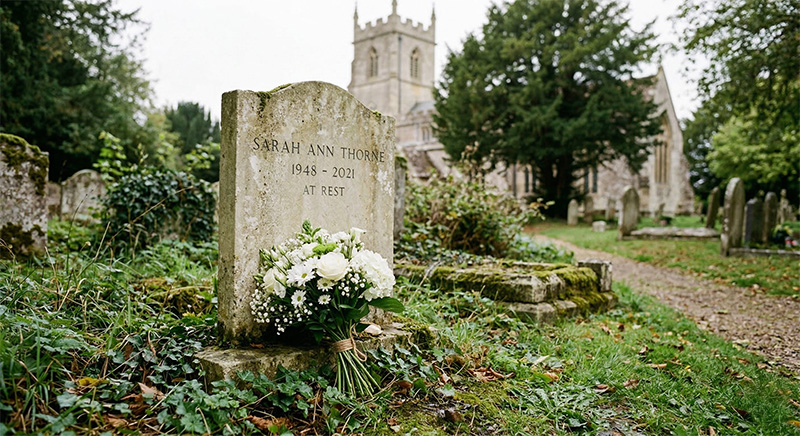
There is no preparation that fully readies you for the first time you stand at someone’s grave. But knowing a little about what the experience might be like can make it feel less like something to brace against.
Visiting a grave is one of the most personal acts in grief. For some people it brings comfort, a place to go, a place where the person feels present, somewhere that belongs specifically to the act of remembering. For others it feels strange or difficult, or does not bring the feelings they expected, or brings feelings they were not prepared for.
All of these responses are normal. There is no correct way to experience a grave visit, and no correct frequency for making them. This guide is for anyone preparing for a first visit, or returning after a long absence, or simply wondering whether visiting is something they should be doing and why it does or does not feel right.
The First Visit
For many people, the first visit to a grave happens around the time of the funeral, when the burial takes place and the grave is freshly dug. That first encounter tends to happen in a context of shock and ceremony, surrounded by other people, which means the experience of the grave itself is often not fully processed until a later visit, alone or with fewer people around.
The first time you return, on your own terms, at a time you have chosen, can feel very different. Some people describe it as more real than the funeral. The name on the stone, the specific piece of ground, the realisation that this is a permanent place where a permanent thing has happened. It can bring a wave of grief that the formality of the funeral held at bay.
There is no right time for this first visit. Some people go within days of the burial. Others wait weeks or months, until they feel ready, or until they stop waiting to feel ready and simply decide to go. Both approaches are valid. The visit will be what it will be whenever you make it, and that is not something you can control by choosing the right moment.
A few practical things worth knowing before a first visit. Graveyards are often quieter and more ordinary than people expect. They are generally well-maintained, peaceful places where other people are also quietly visiting. You are unlikely to be the only person there, and the presence of others can actually make the visit feel less exposing rather than more. You do not need to stay for any particular length of time. Five minutes and ten minutes and an hour are all equally valid. You do not need to say anything, or feel anything in particular, or do anything while you are there.
What to Bring
There is no obligation to bring anything to a grave visit. Your presence is enough. But many people find it helpful to have something to bring, both as a practical act and as a way of giving the visit a shape.
Flowers
Fresh flowers are the most common thing people bring to a grave, and there is a reason for that. They are living, temporary, and beautiful. They mark that someone has visited. They change with the seasons and the occasion. Some people bring the same flowers every time. Others bring whatever is in the garden, or whatever was in a shop that reminded them of the person. There are no rules about which flowers are appropriate. The person who knew them best is no longer there to have an opinion about it, and that is exactly as freeing as it sounds.
A plant or bulbs
Something that can be planted at the grave and will return each year. Worth checking with the cemetery or churchyard first, as some have rules about what can and cannot be planted on graves. Many do allow small plants or bulbs, which over time can make the grave feel more like a garden than a plot.
A small object
Some people leave small objects at a grave. A pebble from a beach they loved. A token that connects to something about the person. These objects accumulate over time and become part of the texture of the grave, a quiet record of visits made and of people who have been there.
Something to eat or drink
Some people bring a flask of tea or a drink the person loved and sit with it at the grave for a while. This is not unusual, and it is not morbid. It is simply a way of spending time in the place in a way that feels companionable rather than only ceremonial.
Nothing at all
Bringing nothing is equally valid. Standing at a grave with empty hands, spending a few minutes in the place, and leaving again is a complete visit. The meaning is in the going, not in what you carry.
What to Do When You Get There
This question worries people more than almost any other aspect of a grave visit, and the answer is simpler than most people expect. You do not have to do anything specific. You can stand. You can sit if there is somewhere to sit. You can speak out loud or in your head or not at all. You can cry or not cry. You can tidy the grave or leave it as it is. You can stay for five minutes or for an hour.
Some people find it natural to talk to the person. To tell them what has been happening, what they are thinking about, what they wanted to say. Others find this feels strange and prefer to simply be there in silence. Both are fine. The grave is not a performance space. There is no audience and no expectation.
If you are visiting with other people, particularly children, it can help to have a loose idea of what you might do together. Laying flowers, tidying the grave, saying a few words, looking at the headstone together. Having something gentle to focus on can make a shared visit easier, especially for children who might not know what they are supposed to do with themselves.
When the Visit Does Not Feel How You Expected
Many people arrive at a grave expecting to feel close to the person, and instead feel nothing very much. The grave can feel like a piece of ground with a stone on it. The name carved into the stone can feel abstract rather than connected to the person they knew. The setting can feel impersonal, or too tidy, or simply not like the person at all.
This is more common than people realise, and it does not mean you are grieving wrong or that the visit was not worth making. The feeling of closeness to someone who has died is not tied to the geography of their burial. Some people feel closest to the person in the kitchen, or in the car, or walking the route they always walked, and feel very little at the grave itself. That is just how it is for some people, and it does not need to be fixed.
Equally, some people arrive at a grave expecting to feel okay and are overwhelmed in a way they were not prepared for. The reality of the stone, the permanence of it, the specific fact of this person being in this ground in this place, can bring grief to the surface very forcefully. If this happens, try to let it. You are in a place that exists for exactly this purpose. There is nothing wrong with crying at a grave.
How Often Should You Visit
There is no right answer to this, and it is worth being cautious about any expectation, internal or external, that visits should happen at a particular frequency. Some people visit every week. Some go once a year, on the anniversary or the birthday. Some go several times in the early months and then less often as time passes. Some rarely visit at all and find their remembrance happens elsewhere.
What matters is that the frequency feels right to you rather than being driven by obligation or guilt. Visiting a grave out of a sense that you should, when it brings you no comfort and leaves you feeling worse, is not something that serves either you or the person you are visiting. Conversely, if visiting brings comfort and you want to go often, there is nothing wrong with that either.
Some people find that their relationship with the grave changes over time. In the early months it can feel necessary, a specific place to take the grief. Later it may feel less urgent, as the grief finds other homes. That shift is natural and does not mean anything has gone wrong.
Visiting from a Distance
Not everyone is able to visit a grave regularly, or at all. The person may be buried far from where you live. You may not be able to travel. The grave may be in another country. These circumstances are more common than people sometimes acknowledge, and they can add a particular strain to grief, the sense that you cannot even access the place where the person is.
It is worth knowing that the connection to someone who has died is not dependent on proximity to their grave. You can remember someone, speak to them, honour them, and maintain your relationship with them from any distance. The grave is one place where remembrance can happen. It is not the only place, and it is not necessarily the most important one.
If you cannot visit but want to feel some connection to the place, there are things that can help. Asking someone who lives nearby to visit and send a photograph. Visiting virtually through memorial websites or mapping tools that allow you to see the place. Tending a memorial at home that feels connected to the grave, even from a distance.
And if you do eventually get to visit after a long absence, be gentle with yourself about whatever you feel when you get there. A first visit after years away can be as powerful as the very first one.
Visiting a Grave With Children
Taking a child to visit a grave for the first time is something many parents and carers approach with apprehension. There is a worry that it will be too much, or that the child will be frightened, or that the visit will somehow make the death more real in a way that causes harm.
In practice, most children respond to a grave visit with more equanimity than adults expect. They tend to be practical and curious rather than overwhelmed, asking questions about the stone, or what is underground, or why there are flowers, in the direct way that children ask questions about things they do not yet have the cultural weight to treat as sensitive.
Answering those questions honestly and simply, in age-appropriate language, tends to be more helpful than deflecting them. Children who are given honest, gentle answers about death and burial tend to feel more secure in their grief than those who sense that the adults around them are avoiding the subject.
Giving children something to do at the grave, laying flowers, choosing a pebble to leave, helping to tidy, can also make the visit feel more active and less exposing for them. Having a job to do is often easier for a child than simply standing in a quiet place trying to feel the right things.