Family Milestones & Celebrations
New Baby After Bereavement: Joy and Grief Together
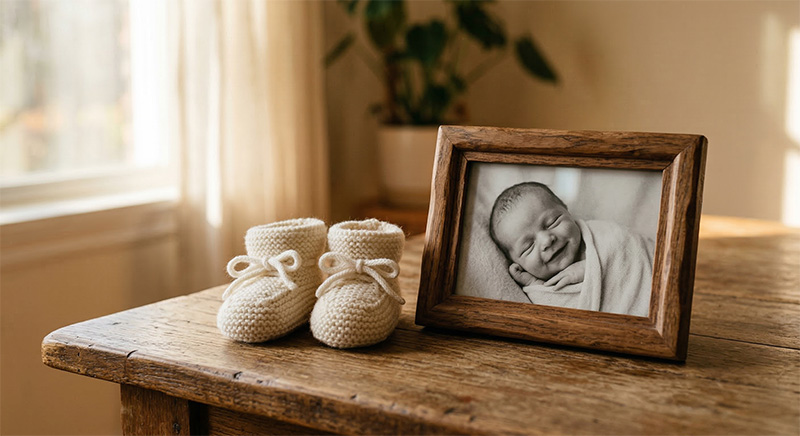
A new baby is supposed to be one of the happiest things that can happen. And it is. It can also, at exactly the same time, be one of the loneliest reminders of who is no longer here.
When a baby arrives after a bereavement, or when someone dies while you are pregnant or in the early months of a child’s life, the two experiences sit alongside each other in a way that can be very hard to make sense of. The joy is real. The grief is real. Neither one cancels the other out, and trying to keep them separate tends not to work for very long.
This guide is for anyone navigating a new baby and a loss at the same time, or for those welcoming a baby into a family that is still finding its shape after someone died. It is also for anyone wondering how to support someone in this situation.
The Particular Weight of This Combination
There are few situations in life where joy and grief are asked to occupy the same space as completely as they are when a baby is born after a bereavement. The arrival of a new life makes the absence of the person who died feel, if anything, sharper rather than softer. You want to tell them. You want them to meet this person. You want them to hold the baby, to say the things they would have said, to be the grandparent or the aunt or the sibling or the friend they were always going to be.
That wanting does not go away. It tends, in fact, to intensify in the weeks after the birth, when the initial exhaustion lifts slightly and the reality of who is missing settles in more fully. The baby is here. The person who should have known them is not. Those two facts sit next to each other every day.
This is not something that needs to be fixed or resolved. It is simply what it looks like to love people across time, to have a life that contains both new beginnings and permanent absences. The people who tend to navigate this best are not the ones who find a way to keep the grief and the joy separate. They are the ones who find a way to hold both at once, without requiring one to give way to the other.
When a Grandparent Never Gets to Meet the Baby
One of the most common versions of this grief is the loss of a grandparent before a grandchild is born. The grandparent who died knowing a baby was coming, or who died before the pregnancy even began, and who will never hold this child.
If you are a parent in this situation, you may find yourself grieving not just for yourself but for your child. For the relationship they will never have. For the grandparent who would have been so present, so devoted, so specifically themselves in the way they loved this baby. That loss is real, and it belongs to your child as well as to you, even if they are too young to know it yet.
Many parents in this situation feel a pull to make the grandparent real for the child as they grow. To tell them stories. To show them photographs. To say, when something comes up that connects to the person: that is where you get that from, that is something your grandma always did. This impulse is a good one. Children who grow up knowing the people they never met tend to carry a sense of connection to them that matters, even without the relationship itself.
It is also worth giving yourself permission to grieve this on behalf of the person who died. They wanted to know this child. They were cheated of something, and that deserves to be acknowledged, not just the loss to you and your family but the loss to them.
When Someone Dies While You Are Pregnant
Losing someone during a pregnancy is a particular kind of grief because it asks you to carry two enormous things at the same time in the most literal possible sense. You are growing a life while mourning one. Your body is doing something extraordinary while your mind and heart are somewhere else entirely.
Pregnancy after bereavement, or bereavement during pregnancy, can make the usual rhythms of expecting a baby feel strange. The scans, the preparations, the conversations about the future. All of it is overlaid with a loss that the people around you may not always know how to hold alongside the happy news.
Some people find that others struggle to respond to the combination of grief and pregnancy in a way that acknowledges both. The tendency is to default to the good news, to focus on the baby and treat the grief as something that can wait. If you are finding this, it is okay to name what you need. To say: I am really happy about the baby and I am also very sad about losing her, and I need both of those things to be okay to talk about.
If the person who died knew about the pregnancy, that can carry its own particular significance. The last conversation you had with them. What they said about the baby. Whether they knew the sex, or the name, or anything about the plans you had made. These details tend to become very precious, and holding onto them is a completely natural thing to do.
Naming a Baby After Someone Who Has Died
One of the most enduring ways people choose to honour someone who has died when a baby arrives is to give the child their name, or a version of it, as a first name or a middle name. It is a decision that carries a great deal of weight and one that is worth thinking through carefully.
For many families, naming a baby after someone who has died feels entirely right. A way of keeping the person present. A thread of continuity between generations. A daily reminder, as the child grows, of who they carry something of.
It is also worth thinking about the child’s experience of the name as they grow older. A name that carries meaning and history can be a gift. It can also be a weight, depending on the person being commemorated and the feelings in the family around the loss. There is no universal answer. The question is really whether the name will serve the child well as they grow into it, and whether it will keep the person alive in the family in a way that feels warm rather than heavy.
If you are considering this and there are other family members with strong feelings about it, having that conversation openly and early tends to be better than deciding privately and hoping everyone will feel the same way. People’s feelings about naming after the dead can be unexpectedly strong in both directions.
Introducing Your Baby to Someone They Will Never Meet
Many parents find themselves wanting to introduce their new baby to the person who died, in whatever way feels meaningful to them. This might look like visiting a grave with the baby. Telling the baby about them. Looking at photographs together and saying their name out loud. Writing a letter to the person about the baby, describing who they are, what they look like, what they have done so far.
None of this requires any particular belief about what happens after death. It is simply a way of keeping a relationship alive that mattered, and of making the two people real to each other in whatever way is available to you.
As the child grows, continuing to make the person real to them is one of the most meaningful things you can do. Saying their name regularly rather than letting it fade. Sharing stories. Pointing out the ways the child resembles them or carries something of them forward. Keeping them part of the ordinary conversation of family life rather than a subject that only comes up on anniversaries.
How Other People Get This Wrong, and What You Actually Need
When a baby arrives after a bereavement, the people around you will often focus almost entirely on the baby. This is natural, and some of it is exactly what you want. But it can also mean that the grief gets quietly set aside, treated as something that should be fading now that there is something so happy to focus on. New life as a cure for loss is a very common assumption, and it is not true.
If you find that people have stopped acknowledging your grief since the baby arrived, it is reasonable to name that. A baby does not end bereavement. It adds to life, which is a different thing. The grief and the joy are both present, and both deserve space.
What most people in this situation actually need is fairly simple. Someone who asks how you are and means it, not just how the baby is. Someone who still mentions the person who died by name, who does not treat their name as something that needs to be protected from the happiness of the new arrival. Someone who understands that you can be deeply grateful for your baby and also deeply sad about your loss, on the same afternoon, sometimes in the same breath.
If You Are Supporting Someone in This Situation
If someone close to you has had a baby after a bereavement, or lost someone while pregnant or in the early months with a new baby, the most useful thing you can do is hold both things at once alongside them.
Celebrate the baby. Also mention the person who died. Ask how they are feeling about the loss as well as about the new arrival. Do not assume that the baby has made everything okay, or that bringing up the grief will cast a shadow over the happiness. For most people in this situation, having both things acknowledged at the same time is exactly what they need and rarely what they get.
Some things that tend to help: sending a message that names both the joy and the sadness. Remembering the anniversary of the death even now that there is a baby in the picture. Asking, specifically, how it feels to have the baby without the person who died. Saying their name.
And if you are not sure what to say, saying that is fine too. Something like: I am so happy about the baby and I also know how much you are missing her right now, and I just wanted you to know I am thinking about both of those things. That is enough. It is often more than people get.