Difficult Dates After Loss
Easter After Bereavement: Navigating Spring Without Them
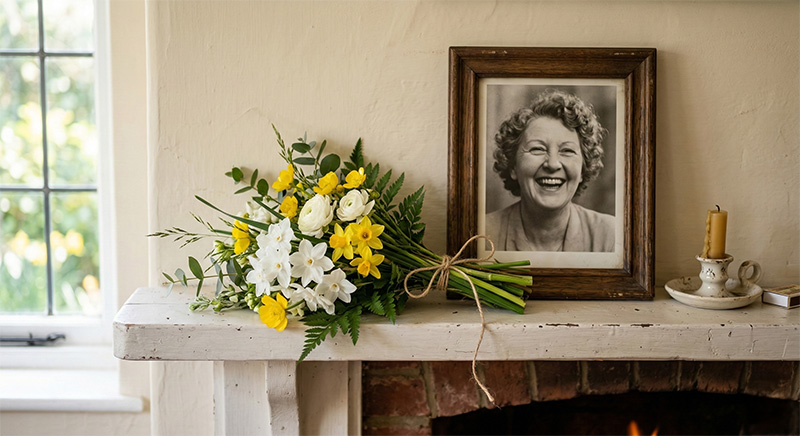
Spring has a particular cruelty when you are grieving. Everything around you is insisting on renewal, and you are still somewhere else entirely.
Easter is not as freighted with expectation as Christmas, but it carries its own weight. It is a family occasion. It tends to involve gathering, food, tradition, the same things done in the same way each year. And if someone is missing from that, you will feel it.
This guide is for anyone facing Easter while carrying a loss. Whether it is the first Easter without someone, or one further along when you thought you might be handling it better by now, you are in the right place.
Why Easter Can Be Hard When You Are Grieving
Easter is one of those occasions that tends to look the same every year. The same faces around the same table. The same food, the same arguments about when to eat, the same habits and rituals that have quietly accumulated over years without anyone deciding to start them. That consistency is part of what makes it special, and it is also what makes it so difficult when someone is no longer part of it.
Unlike Christmas, Easter does not have weeks of build-up in the shops, which means it can arrive faster than you expect. One week it is an ordinary stretch of the calendar, the next it is a four-day weekend and everyone around you has plans. If you are grieving, that can feel like being caught off guard by something you should have been prepared for.
Easter also arrives in spring, and spring has its own relationship with grief. There is something about the season that can amplify loss rather than ease it. The days getting longer, the blossom appearing, the sense that the world is starting up again. All of that renewal can sit very uncomfortably alongside the feeling that something in your own life has permanently ended. The contrast between the world outside and what you are carrying inside can be sharper in spring than at almost any other time of year.
The First Easter Without Them
The first Easter after a loss tends to be the most disorienting, for the same reason that all first occasions are hard. You have never done this one before. You do not yet know what it feels like, which means you cannot prepare for it in the way you might be able to in later years.
You may find yourself doing things out of habit before remembering. Reaching for the phone to ask what time everyone is arriving. Buying something at the shops without thinking, then realising you bought it for them. These small moments of forgetting, followed by the jolt of remembering, are one of the more painful features of early grief. They tend to happen most around occasions when the habits of connection were strongest.
The first Easter is also often the point where the reality of the longer term starts to settle in. The immediate crisis of death has passed. The practicalities have been dealt with. The people who rallied around in the early weeks have returned to their ordinary lives. And here you are, at the first proper family occasion since it happened, working out what this all looks like now.
Be patient with yourself on this one. The first Easter does not need to be handled well. It just needs to be got through.
Easter With Family When Everyone Is Grieving Differently
Easter often brings families together, which means it can be the first time since the death that everyone who is grieving the same person is in the same room. That can be a comfort. It can also be complicated.
People grieve differently, and those differences become very visible when you are all together for an occasion. One person wants to talk about the person who has died. Another finds that too painful and would rather focus on getting through the day. One person is coping by being busy and cheerful. Another is barely holding it together. These responses can grate against each other, even among people who love each other and are grieving the same loss.
If you are gathering with family for Easter and you know this might be a tension, it can help to have a brief conversation beforehand about how you want to handle the day. Not an elaborate plan, just a shared understanding. Whether you want to acknowledge the person who has died during the meal, or raise a toast, or simply allow the day to unfold without forcing anything. Having talked about it even briefly tends to smooth the day considerably.
It is also worth giving everyone, including yourself, a little extra tolerance. Grief makes people behave in ways they would not otherwise. The relative who goes very quiet, the one who makes jokes at slightly the wrong moment, the one who cries unexpectedly over something small. These are all just people trying to get through a hard occasion in the only way they currently know how.
Easter With Children After a Loss
If children are part of your Easter, the day carries an additional layer. Children often associate Easter with particular rituals, egg hunts, chocolate, the same things they do every year. They may also be grieving themselves, and the combination of wanting to celebrate and missing someone can be hard for them to make sense of.
Try not to feel that you have to choose between acknowledging the grief and allowing the children to have a good day. Both things can coexist. Children are often more capable of holding joy and sadness at the same time than adults give them credit for, particularly if the adults around them model that it is okay to feel both.
If the person who died was part of previous Easters for the children, naming them on the day can help. Saying something simple like “Grandad always loved hiding the eggs, didn’t he” keeps the person present without requiring a heavy conversation. Children generally find it easier when the people they have lost are spoken about naturally rather than treated as a subject that adults go quiet around.
Ways to Approach Easter When You Are Grieving
Keep plans flexible
Easter is a four-day weekend, and that is a long time to navigate if you are finding it hard. Try not to over-commit yourself. Leave room to change plans if you need to, or to step away from things that are not serving you. A good enough Easter that you could adapt as you went is better than a perfectly planned one that left no room for how you were actually feeling.
Find a way to include them
Some people find it helpful to bring the person who has died into Easter in some small way. Cooking something they always made. Using a dish or a tablecloth of theirs. Telling a story about a previous Easter that involved them. These small inclusions can make the day feel more like remembrance than absence.
Allow the day to be different
If the thought of doing everything exactly as usual is too much, give yourself permission to do it differently this year. A quieter day. A different location. Fewer people. Simplified food. There is no rule that says Easter has to look the same every year, and sometimes the most sensible thing you can do in the first year or two after a loss is to change enough that the day does not spend all its time measuring itself against the version that existed before.
Go outside if you can
Easter falls in spring, and however complicated the season can feel when you are grieving, being outside in it can help. A walk on Good Friday or Easter Sunday, somewhere with some space to it, can give the feelings of the weekend somewhere to go that is not just the inside of a house full of habits and memories.
Spring Grief: When the Season Itself Feels Hard
Easter is embedded in spring, and for some people spring is one of the harder seasons in the grief calendar, for reasons that are not always easy to articulate.
Part of it is the visibility of renewal. Blossom and new growth and longer evenings are beautiful, but they can also feel like a provocation when you are in a period of life that does not feel like it is renewing at all. The world outside insists that things begin again. Your interior world knows that some things do not.
Part of it may also be the particular timing of the death. If your loved one died in winter or in the early part of the year, spring may mark the point where the season they died in gives way to the next one, and something about that transition can be unexpectedly difficult. The changing of the season can feel like a kind of leaving behind.
If spring is hard for you in a way that goes beyond any specific occasion, that is worth paying attention to. Seasonal patterns in grief are real, and knowing that spring is a harder time for you means you can be a little more intentional about support and self-care in the weeks around Easter, rather than being caught off guard by it year after year.
When Easter Falls Near Another Difficult Date
Because Easter moves each year, it sometimes falls close to other dates that carry grief. A death anniversary in March or April. A birthday in the same window. The convergence of two difficult dates in a short space of time can be genuinely exhausting, particularly in the first year.
If you know this is coming, try to plan around it rather than hoping the proximity will not matter. Give yourself more space than usual in that period. Lower your expectations of yourself. Ask for more support than you think you need, because when two hard things land close together the combined weight tends to be more than the sum of its parts.
And if you are already in it and finding it harder than you expected, please be kind to yourself. Two difficult things at once is two difficult things at once. There is no version of that which is supposed to be manageable without effort.