Family Milestones & Celebrations
Weddings After Loss: Honouring Absent Loved Ones on Your Day
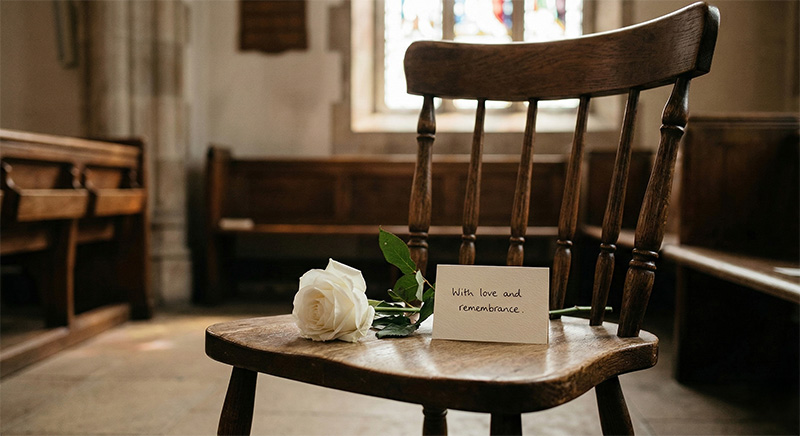
Planning a wedding is supposed to be joyful. And it can be. But when someone who should have been there is not going to be, joy and grief have a way of sitting right next to each other throughout the whole process.
Whether you lost a parent, a sibling, a close friend, or anyone else who would have been part of your day, their absence will be felt. During the planning, at the ceremony, at the reception, in the photographs. A wedding is one of those occasions that holds the people you love most up to the light, which means it also holds the gaps where people used to be.
This guide is for anyone planning a wedding while carrying a loss, or supporting someone who is. It covers how to think about including someone who has died in your day, how to navigate the complicated feelings that can surface during the planning process, and some practical ideas for honouring their memory in ways that feel genuine rather than performative.
Why Weddings Bring Grief to the Surface
Weddings are one of the occasions in life where the people who matter most are gathered in one place. That is part of what makes them meaningful. It is also part of what makes the absence of someone so acute.
During the planning process, the grief can arrive in unexpected moments. Choosing a venue and knowing they will never see it. Buying the dress or the suit and wishing you could show them. Writing the guest list and reaching the point where their name should be. These moments can catch you completely off guard, even if you have been managing your grief reasonably well in ordinary life.
The day itself tends to bring a different quality of feeling. There will likely be moments of real joy, and there will be moments when the knowledge of who is missing sits very close to the surface. Both of these things can be true at the same time, and they do not cancel each other out. A wedding can be one of the happiest days of your life and also one in which you feel the loss of someone very sharply. That is not a contradiction. It is just what it looks like when life continues after grief.
Many couples say that the moment they feel the absence most acutely is during the ceremony itself, or during a first dance, or when the family photographs are taken. These are the moments when the shape of who is missing becomes most visible. Knowing in advance that these moments might be hard can help, not to prevent the feelings but to meet them with a little more steadiness when they arrive.
Walking Down the Aisle Without Them
For many people who have lost a parent, one of the most emotionally loaded aspects of a wedding is the question of who walks them down the aisle, or who stands in the place that parent would have occupied.
There is no single right answer to this, and it is worth resisting the pressure to find one quickly or to make the decision based on what seems most traditional or most likely to please other people. The question is really about what will feel most right to you on the day.
Some people choose to be walked by another family member, a surviving parent, a stepparent, a sibling, an aunt or uncle. Some people choose a close friend who knew the person who died. Some people choose to walk alone, as a deliberate acknowledgement that they are doing this without the person they lost, and that that is significant. Some people choose to walk with their partner from the beginning, changing the structure of the ceremony entirely.
Whatever you choose, the decision belongs to you. If someone in your family has strong feelings about what should happen, it is reasonable to listen to them and equally reasonable to make the decision that is right for you rather than the one that is easiest for everyone else.
Ways to Include Someone Who Has Died in Your Wedding
Many couples want to find a way to bring the person who has died into the day, to acknowledge their absence in a way that feels genuine and personal rather than just going through the motions of a tribute. What follows are ideas that people have found meaningful. Not all of them will be right for every wedding, and there is no obligation to do any of them.
A mention in the ceremony
Many registrars and celebrants are experienced at including a brief acknowledgement of someone who has died as part of the ceremony itself. This can be as simple as a single sentence naming them and noting that they are missed, or it can be woven more fully into the ceremony if that feels right. If you want to include something like this, speak to your officiant early in the planning process so they can help you find the right words and the right moment for it.
A reserved seat or a single flower
Leaving a seat empty with a flower on it, or a small card with their name, is a simple way of acknowledging their absence without requiring anyone to do anything or say anything. Some families find this very moving. Others find it too painful to look at throughout the ceremony. It is worth thinking about which it is likely to be for you and the people around you.
Carrying something of theirs
A piece of jewellery that belonged to them. A fabric from something of theirs sewn into the lining of a dress or the hem of a suit. A handkerchief they owned. A buttonhole made with flowers from their garden. These small, private inclusions can feel very significant to the person carrying them, without requiring any public acknowledgement at all.
A photograph or display
Some couples include photographs of people who have died as part of the wedding decor, either alongside photographs of other loved ones or in a dedicated display. This can be a way of making the person visible in the room without drawing specific attention to their absence during the ceremony itself.
A toast or mention in the speeches
A brief mention in a speech, or a dedicated toast to those who are no longer with us, can be one of the most natural ways to include someone who has died. Most wedding guests, whatever their own experience of grief, tend to respond to these moments with warmth rather than discomfort. People generally want to acknowledge the loss alongside the celebration if they are given the opening to do so.
A song or a reading
A piece of music they loved, played at a particular moment in the day. A reading that was meaningful to them or to your relationship with them. These inclusions can carry a great deal of feeling without requiring any explicit reference to the death itself.
Something at the reception
A memorial candle burning at the reception. A favourite drink of theirs offered as a toast. A dish they loved included in the menu. A corner of the room with photographs and a small tribute. These quieter inclusions at the reception can feel less exposed than something during the ceremony, and for some people that is the right balance.
What to Say in a Wedding Speech About Someone Who Has Died
Wedding speeches are one of the moments where the absence of someone is most likely to be acknowledged publicly, and also one of the moments people find hardest to navigate. If you are giving a speech and want to mention someone who has died, the most useful advice is to keep it brief, specific, and warm.
Brief, because a long tribute in the middle of a wedding speech can shift the emotional register of the room in a way that is hard to bring back from. A sentence or two is usually more powerful than a paragraph.
Specific, because mentioning something particular about the person, a habit, a phrase they used, something they would have done or said on a day like this, tends to land more genuinely than something general. “He would have loved today” is fine. “He would have been first on the dance floor and last to leave, and he would have cried at the vows and denied it” is better.
Warm, because the goal of mentioning them is not to bring the room to grief but to bring the person into the room. A touch of humour, if it is true to who they were, is not disrespectful. It is often exactly right.
When the Planning Process Becomes Difficult
Wedding planning involves dozens of decisions, and many of them can surface grief in ways that are hard to anticipate. The florist asks what flowers your mum liked. The photographer asks who is in the wedding party. You are choosing music for the first dance and the song you want was the song at their funeral.
These moments can arrive with a force that feels disproportionate to the practical task at hand. They are not disproportionate. They are just grief, doing what grief does, which is to find the gaps in your ordinary life and make itself known.
A few things that can help during the planning process. Telling the key suppliers early that you have lost someone, so that they can be thoughtful about the questions they ask and how they ask them. Giving yourself permission to step away from planning for a period if it becomes too much. Having a person, a partner, a friend, a family member, who can take on some of the decisions when you do not have the capacity for them.
It is also worth knowing that it is completely normal to feel moments of real happiness during the planning process alongside the grief. Excitement about the day, pleasure in the details, genuine joy at being engaged and building a life with someone. Feeling those things does not mean you have forgotten the person you lost or that you are not grieving properly. It means you are a human being holding more than one thing at once, which is what people do.
On the Day Itself
There will be moments on your wedding day when the grief is close. Allow them. Trying to suppress the feeling or push it aside tends to make it surface more forcefully at a less convenient moment. If you need to cry, cry. If you need a minute, take a minute. Build a little space into the day if you can, a moment between the ceremony and the reception, a quiet five minutes somewhere, so that the feelings have somewhere to go other than the middle of everything.
It can also help to tell one or two people in advance that the day may bring some grief to the surface for you, and to ask them to check in on you quietly during the day. Not to manage your grief for you, but just to know. Having someone who is aware of what you are carrying can make it feel less lonely.
And please remember, on a day that will ask you to be present and joyful and grateful: you are allowed to miss someone at your wedding. You are allowed to feel their absence on the happiest day of your life. These things do not diminish the day. They are part of what it means to love people across time.