Memorial Milestones
Death Anniversary: How to Mark the Day With Care
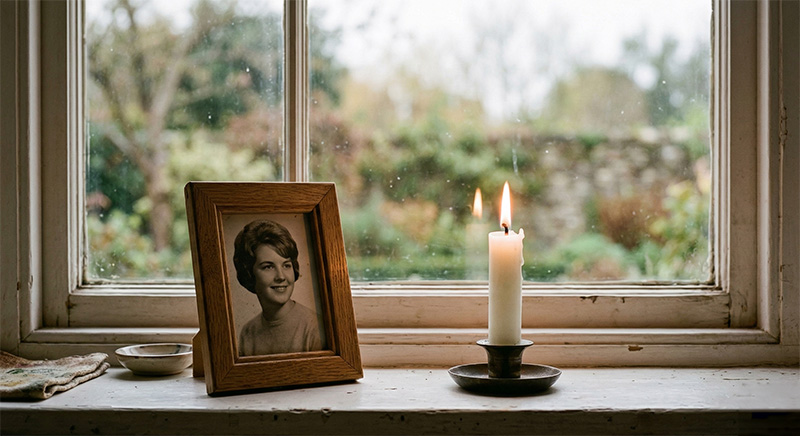
The date is already there in your mind before you even check the calendar. You know it’s coming. And somehow, no matter how much time has passed, it still finds you.
The anniversary of a loved one’s death is one of the hardest days in the grief calendar. Not because grief is absent on other days, but because this one has a name. A fixed point on the year that asks you, whether you are ready or not, to remember.
Some people find the lead-up worse than the day itself. Others feel surprisingly okay on the day and then fall apart a week later. Some want to mark it in a way that feels intentional and meaningful. Others want to get through it quietly and without fuss. None of these responses is wrong.
This guide is here for anyone wondering how to approach the anniversary of a death. Whether it’s the first one, or the fifth, or one that has crept up on you unexpectedly after years of feeling like you had it handled.
Why Death Anniversaries Hit Differently
Grief has a way of softening in the spaces between significant dates. Life fills back in. You find yourself laughing again, making plans, going through days without the weight of loss sitting quite so heavily on your chest.
Then the anniversary comes, and it can feel like being pulled back to the beginning.
This is not a sign that you are not healing. It is simply the nature of grief around dates that carry meaning. Psychologists sometimes refer to this as an anniversary reaction — a temporary but very real intensification of grief that clusters around significant dates. It can begin days or even weeks before the anniversary itself, sometimes before you have consciously registered that the date is approaching.
You might notice changes in your sleep, your mood, your appetite or your ability to concentrate. You might feel irritable, or flat, or unexpectedly tearful over something small. Your body often knows what the calendar is doing even when your mind is trying not to.
Knowing this in advance can help. Not to stop the feelings, but to meet them with a little more understanding when they arrive.
The First Anniversary
The first death anniversary is often the most feared. In the months after a loss, people sometimes say that they are dreading it, building it up as a kind of final test of their grief. In practice, many people find it is simply another hard day. Heavy, yes. Tender, yes. But survivable, in the same way that all the other days have been survivable.
What makes the first anniversary distinct is that it marks something. The first full loop of the calendar without them. Every season has been lived through once. Every birthday, every holiday, every ordinary Tuesday has happened for the first time in the new reality of their absence.
There is something about completing that first year that is worth acknowledging, even gently. You have done something hard. You have carried something heavy. The anniversary is not just a day of loss. It is also, quietly, a marker of your own endurance.
If this is your first anniversary
Try to plan something for the day, even something small. Having nothing to do can make the hours feel very long. But keep any plans loose enough that you can change your mind.
Let someone close to you know the date is coming, even if you don’t want company. Just having someone aware of it can ease the feeling of carrying it alone.
How to Mark a Death Anniversary
There is no single right way to spend this day. What follows are ideas that people have found meaningful. Some are quiet and personal. Others involve other people. Some cost nothing. Some take a little more planning. The only question worth asking is: what would feel like the right way to honour this person, and this day, for you.
Visit a place that mattered to them
A grave, a memorial bench, a place they loved to walk, a view they always talked about. Being somewhere connected to them can make the day feel less abstract. You don’t have to do anything in particular when you get there. Sitting with it is enough.
Light a candle
Simple, and often more meaningful than it sounds. Many people light a candle first thing in the morning and let it burn through the day as a quiet presence. Some families do this together at a set time. Some people do it alone. Both are equally valid.
Look through photographs or keepsakes
On ordinary days, looking at photographs can feel too painful to do for long. On the anniversary, many people find they want to sit with those images. To look properly. To remember the details of a face or a laugh that everyday life can blur.
Share a memory with someone who loved them too
Grief can be isolating, and anniversaries even more so. Reaching out to someone who knew your person — a sibling, an old friend of theirs, a parent — and swapping a memory or a story can ease the loneliness of the day. You don’t need to organise anything. A text that says “I’m thinking of her today” is enough to open that door.
Do something they would have enjoyed
Cook a meal they loved. Watch a film they always quoted. Put on a record they played constantly. Doing something ordinary that carries their fingerprints can bring them into the day in a way that feels less like loss and more like presence.
Write something down
A letter they will never read. A list of things you want to remember about them. The things you wish you had said, or the things you did say and are glad of. Writing can give the feelings of the day somewhere to go, which on an anniversary can matter a great deal.
Mark it publicly, if that feels right
Some people find comfort in posting a tribute on social media on the anniversary. Others find it helpful to have friends and family acknowledge the date rather than quietly stepping around it. If you would like people to remember the day alongside you, there is nothing wrong with saying so.
Do something in their memory
A donation to a cause they supported. A small act of kindness done in their name. Volunteering for something they cared about. Extending their values into the world on the day that marks their death can feel like a way of keeping something of them alive.
Take the day off, if you can
This is not always possible, and many people find that the structure of a working day actually helps. But if you have the option, giving yourself permission to not be functional or productive on this particular day is a reasonable thing to do. The anniversary is not a day that owes you cheerfulness.
When the Day Doesn’t Feel How You Expected
One of the more disorienting things about grief anniversaries is that they don’t always feel the way you think they will. Or the way they did last year.
Some people expect to feel devastated and instead feel mostly numb. Some expect to feel numb and spend the whole day crying. Some feel guilty for having had a reasonably okay day. Some feel guilty for having felt too much, as though their grief is an imposition on the people around them.
A few things worth knowing.
Feeling okay on the anniversary is not a betrayal
If you manage to get through the day without it breaking you, that is not evidence that you didn’t love them enough. It might mean you have done a lot of grief work. It might mean the day caught you in a moment of resilience. It might mean nothing at all about the depth of your love.
Grief anniversaries can shift over time
The fifth anniversary may hit harder than the fourth. A year that felt manageable might be followed by one that doesn’t. There is no reliable pattern and no right trajectory. Grief is not a straight line, and neither is the way anniversaries feel.
You might grieve differently from the people around you
If you lost someone alongside others — a parent you share with siblings, a partner whose friends also mourn them — you may find that you each approach the anniversary in different ways. Someone wanting to mark it together when you want to be alone, or vice versa, can create real friction. It helps to talk about it in advance if you can, rather than hoping everyone will naturally want the same thing.
What to Say to Someone on a Death Anniversary
If someone you know is approaching the anniversary of a loss, the most common mistake is saying nothing. It feels safer not to mention it, in case it upsets them. But for most bereaved people, having someone acknowledge the date matters far more than the risk of bringing up something painful.
They are already thinking about it. Saying something doesn’t remind them. It just lets them know they don’t have to carry it quietly.
You don’t need to find the perfect words. Simple and warm is enough.
“I’ve been thinking of you today. I know it’s the anniversary of losing [their name] and I just wanted you to know I’m thinking of you both.”
“Thinking of you today. No need to reply — just didn’t want the day to pass without saying something.”
“I know today is one of the harder ones. I’m around if you want company, or if you’d rather be left alone I completely understand.”
You don’t need to say more than that. Acknowledging the day is the whole job.
Creating a Ritual Around the Anniversary
For some people, the thing that helps most is having something consistent to return to each year. A ritual that becomes associated with the day, so that it has a shape rather than just being an expanse of difficult hours.
Rituals don’t need to be elaborate or solemn. They just need to be yours. Some examples of what people do:
- Walking the same route their loved one used to walk, every year on the anniversary
- Gathering as a family to share a meal and tell stories
- Releasing something: a flower into a river, a balloon, a paper lantern
- Planting something new in a garden each year
- Writing a letter and keeping it with others from previous years
- Making a donation to the same charity every anniversary
- Watching a film or listening to music they loved, alone or together
Over time, a ritual like this can change what the anniversary means. It becomes less of an ambush and more of something you move toward, with intention. A day you have made yours, and theirs, rather than something that simply happens to you.
It might take a few years of trying different things before you find what fits. That is completely normal. The first anniversary is rarely the one where you land on the ritual that will last.
When the Anniversary Falls on a Difficult Day
Sometimes the anniversary lands on a day that makes it harder still. A birthday. A school run. A work presentation you can’t move. A day when everyone around you is celebrating something that has nothing to do with your grief.
On those days, it can help to carve out even a small amount of time that is just for the anniversary. Five minutes with a photograph before the day starts. A candle lit in the evening when everything else is done. A quiet moment in a parked car. You don’t need a whole day to honour someone. You just need a moment that is intentional.
And if the day passes and you didn’t get that moment, it’s okay. The date is not the only chance you have to remember them. You carry them with you regardless of what the calendar is doing.