Everyday Grief
Grief and the Seasons: When the Year Turns Without Them
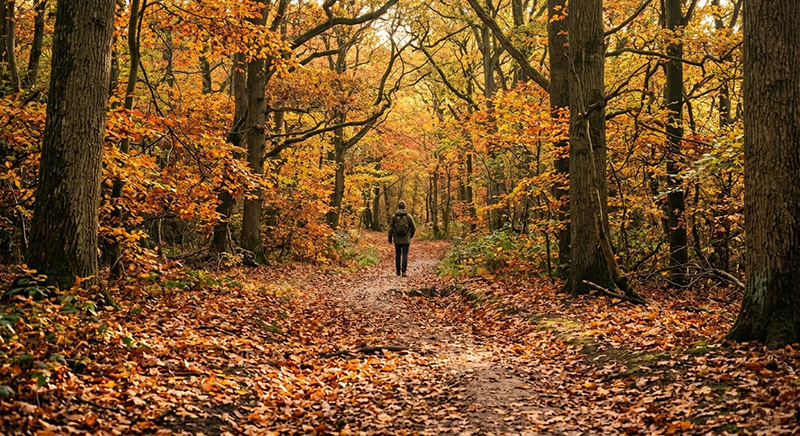
Nobody warns you about the seasons. You brace for the anniversaries, the birthdays, the first Christmas. But the way grief moves with the turning year, quietly and persistently, catches many people entirely off guard.
The changing of the seasons is not a named occasion. There is no date on the calendar, no card in the shops, no public acknowledgement that this time of year is particularly hard. And yet for many bereaved people, the arrival of a new season, the first cold morning of autumn, the first properly warm day in spring, carries its own particular weight.
This guide explores why the seasons can be difficult in grief, what each season tends to bring, and how to move through the year with a little more awareness of your own patterns and a little more kindness toward yourself in the harder stretches.
Why the Seasons Matter in Grief
The seasons matter in grief for several overlapping reasons. The most obvious is association. If someone died in a particular season, the return of that season brings back the time of their death in a way that is sensory and immediate, not just remembered but felt. The specific quality of the light, the smell of the air, the temperature, can all be connected to the period around the death and can produce a grief response that arrives before the mind has consciously registered what is happening.
But seasonal grief is not only about the season in which someone died. Each season carries its own emotional weight and its own relationship with loss, and for many people one season in particular tends to be harder than the others, for reasons that are not always easy to articulate.
There is also a broader dimension. The seasons mark the passage of time in a way that is more gradual and persistent than a specific date. Each seasonal change is a reminder that the year is moving on, that another stretch of life is being lived without the person, that the distance between now and the last time you saw them is growing. For someone in grief, that awareness can be very present at the turning points of the year.
Autumn: When Things Begin to End
Autumn is the season that bereaved people mention most often when talking about difficult times of year. There is something about the particular quality of autumn that resonates with grief in a way that summer and winter do not quite replicate.
Part of it is the sensory shift. The smell of fallen leaves, the quality of the light in October, the shortening evenings. These are not neutral sensory experiences. They carry a cultural and emotional association with endings, with things passing, with the year moving toward its close. When you are already carrying a loss, that association can amplify what you are feeling rather than simply running alongside it.
Part of it is also the social dimension. As the days shorten, people tend to move indoors. The easy distraction of summer gives way to evenings at home, which can be very long when you are grieving. The impulse to keep busy, which many bereaved people rely on in the early months, becomes harder to sustain when the outside world is drawing in.
If autumn is consistently a harder season for you in grief, knowing that in advance can help. Not to prevent the feelings, but to plan a little more support into those months, to be gentler with yourself about what you can manage, and to notice the pattern rather than being repeatedly surprised by it.
Winter: The Weight of Dark Months
Winter grief tends to be concentrated around the festive period, which is covered in more detail elsewhere on this site. But the winter months as a whole carry a quality that can be difficult when you are bereaved, separate from any specific occasion.
The darkness matters. The reduced daylight of a British winter has a measurable effect on mood for many people, and for those who are already carrying grief, that effect can be more pronounced. The combination of low light, cold, and the general sense of the world contracting can make winter a genuinely harder season to move through.
There is also the matter of what winter asks of you socially. The Christmas and New Year period expects togetherness, celebration, warmth, a particular kind of family life that can feel very at odds with the reality of a bereaved household. The contrast between what the season expects and what you are actually experiencing can be exhausting in a way that is distinct from the grief itself.
Getting through winter after a loss is partly about managing that expectation. You are not obliged to have a winter that looks like the one in the adverts. You are allowed to have a quieter, simpler, lower-key version that asks less of you and gives you more room to be wherever you actually are.
Spring: The Complicated Season
Spring is the season that surprises people most in grief. It is supposed to be hopeful. The days lengthen, the blossom appears, the world visibly renews itself. And yet for many bereaved people, spring is one of the harder seasons, in a way that is harder to explain to people who have not experienced it.
Part of it is exactly the renewal that spring offers. The world outside is insisting on new beginnings, and you are not there yet. The contrast between the world’s persistent optimism and your own interior landscape can feel more pointed in spring than at any other time of year. Summer and autumn at least do not make claims about how you are supposed to feel.
Spring is also the season of Easter and Mothering Sunday, two of the more difficult occasions in the grief calendar, which concentrates a lot of harder dates into a relatively short window.
And for people whose loved one died in late winter or early spring, the arrival of the season can mark a kind of anniversary that is not tied to a specific date but is felt in the general quality of the time. The air smells the way it did when they died. The light has the same quality. The body remembers before the mind catches up.
If spring is difficult for you in grief, try not to compound the difficulty by feeling that there is something wrong with finding it hard. You are not obliged to find spring hopeful just because the world does.
Summer: Grief in the Open
Summer tends to be the season that gets the least attention in grief, possibly because it is the season that least fits the cultural image of bereavement. Grief is supposed to be grey and enclosed. Summer is expansive and bright and full of other people being visibly happy.
For some bereaved people, summer is actually the easier season. The light helps. Being outside helps. The general busyness of the season provides distraction and forward motion. If summer is your easier season, that is something to note and to use, to make plans for, to give yourself things to look forward to in that window.
For others, summer is hard in its own way. Holidays that you used to take together now have to be renegotiated. Family summers that had a particular shape around the person who has died now have a gap in the middle of them. Long light evenings that feel abundant to other people can feel very long when you are alone in your grief.
There is also the social dimension of summer. People are out more, in groups, in gardens, at gatherings. The visibility of other people’s happiness can make your own grief feel more isolated rather than less. If this is your experience, it is worth knowing that you are not unusual in finding summer difficult, even though it gets far less acknowledgement in the context of grief than autumn or the festive season.
When the Season They Died in Returns
For people whose loved one died at a specific time of year, the return of that season can be one of the most difficult recurring experiences in grief. It is not exactly an anniversary, because it does not have a specific date. It is more like a mood or an atmosphere that descends as the season returns, a general intensification of grief that is connected to the time of year rather than a particular day within it.
This can begin before the specific anniversary of the death, in the weeks leading up to it when the season starts to feel familiar in a way that is connected to the loss. The first cold snap, or the first warm evening, or the particular smell of a specific time of year, can signal the approach of the harder period before the calendar date itself arrives.
Knowing this pattern in yourself, if it is a pattern you recognise, gives you the ability to be a little more prepared. Not to prevent the grief but to plan around it. To be gentler with yourself in that season, to have more support available, to lower your expectations of what you can manage in those weeks.
Moving Through the Year With Grief
Over time, many people develop a clearer sense of their own seasonal patterns in grief. They know that October is harder for them than September. They know that they need more support in the weeks around Easter. They know that the first warm day of the year will bring a specific kind of feeling that is not about anything that is happening in the present.
This kind of self-knowledge is genuinely useful. It allows you to plan around the harder stretches rather than being repeatedly caught off guard by them. It allows you to ask for more support at certain times of year rather than hoping you will manage. And it allows you to recognise, when a difficult season arrives, that this is a known thing rather than a sign that the grief is getting worse.
The seasons will keep turning. Each one will bring its own qualities, its own memories, its own relationship with the person you have lost. The hope is not that the turning of the year will stop being felt, but that over time it will become something you move through with more steadiness and less surprise, even when it is still hard.